
Value Lanes
Multiple Pathways to Product Design Argumentation
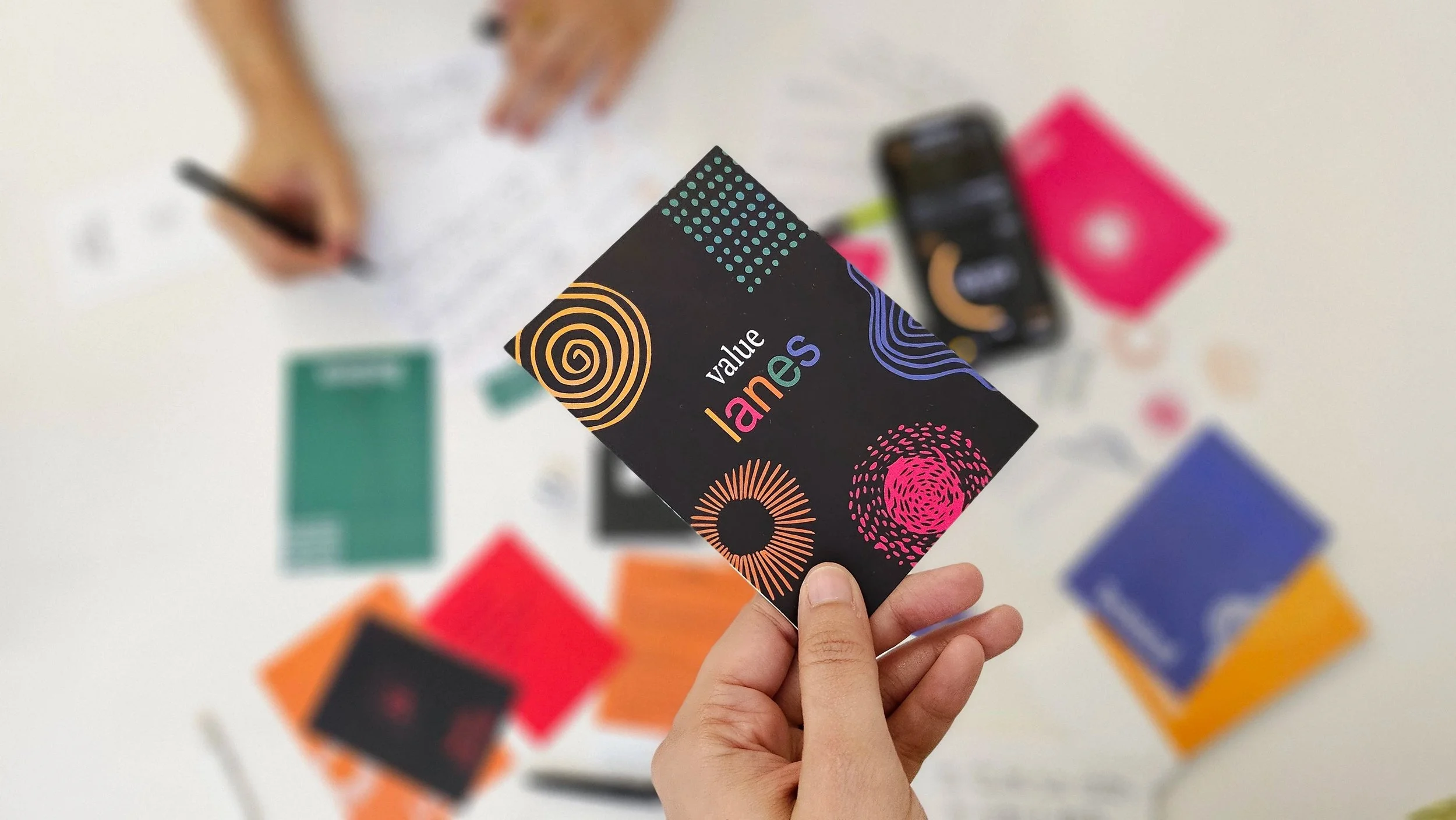
Range of pathways of ethical and value-focused argumentation
As a technology and design practitioner, you constantly navigate competing demands—user needs, business goals, technical constraints, legal obligations, and personal or societal values. Value Lanes offers a structured set of pathways for exploring ethical and value-driven argumentation throughout the product development process. Whether in team discussions, standups, or stakeholder meetings, we regularly advocate for different perspectives shaped by our disciplines and contexts.
Introducing Value Lanes—a conversational toolkit designed to build your ethical reasoning and argumentation skills. Every lane prompts reflection, every card sparks dialogue, and every decision strengthens your ability to argue for what matters.
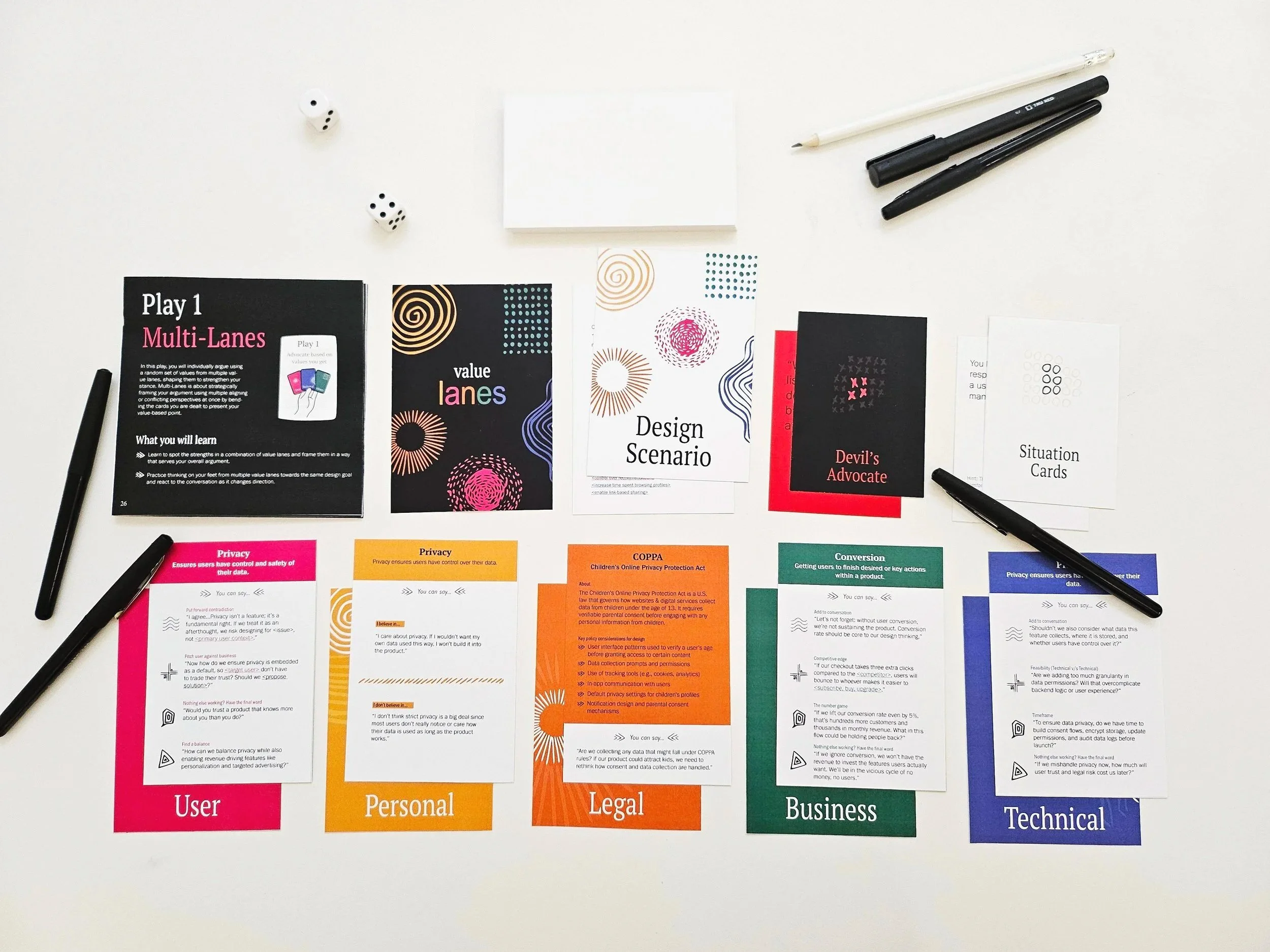
Charting arguments through a range of values
Value Lanes provides design and technology practitioners ways to craft their arguments across a range of values such as user, technical, legal, business, and personal.
-
Principles that prioritize user needs, experiences, and ethical treatment in product interactions.
-
Standards that ensure system reliability, scalability, efficiency, and maintainability.
-
Goals that align product design with profitability, market growth, and strategic differentiation.
-
Requirements that ensure products comply with laws, regulations, and data protection policies.
-
Individual beliefs and ethics that influence how designers and users interact with technology.
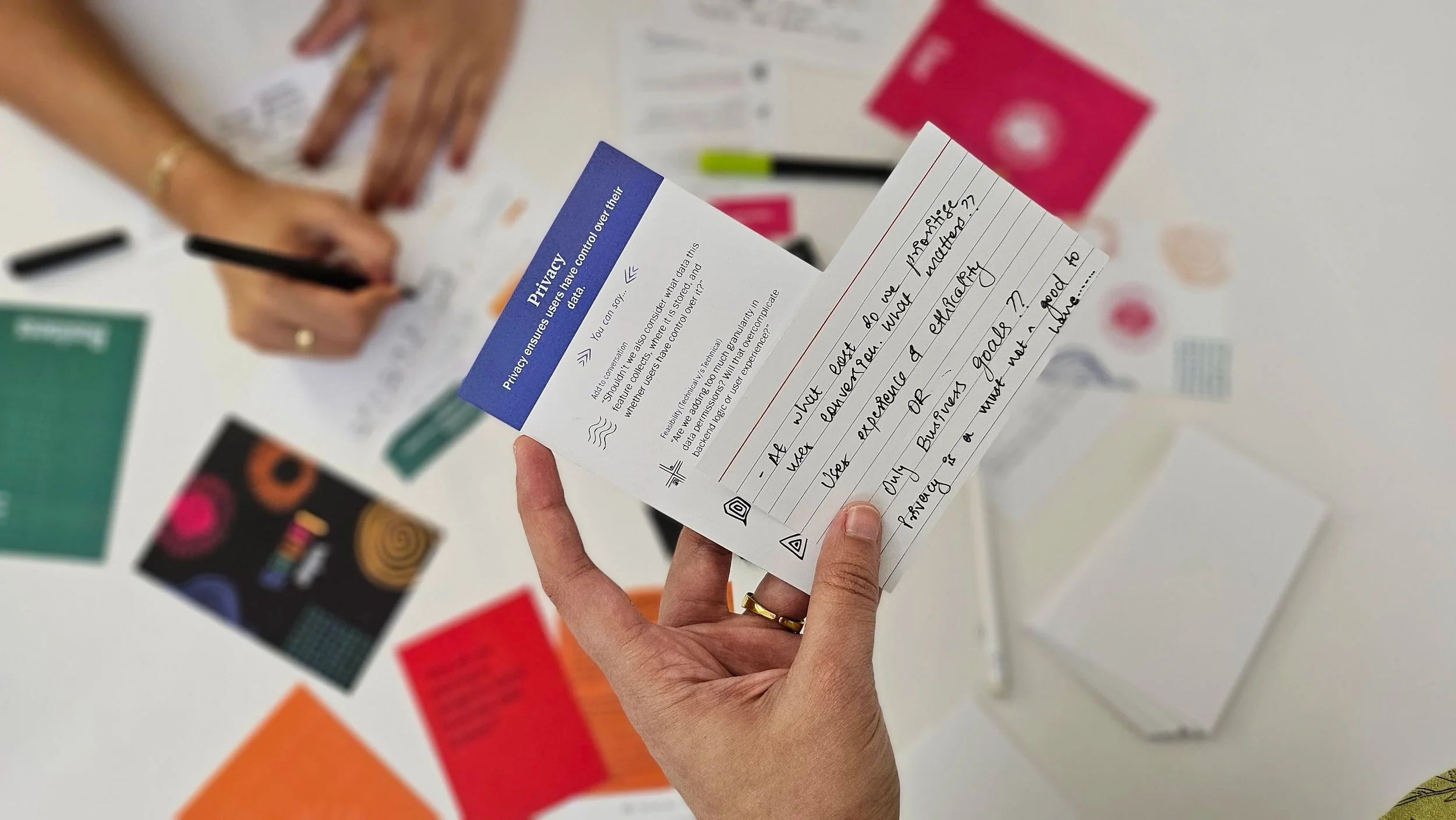
Supporting you with
“What you can say…”
Value Lanes Cards help you build your argumentation skills for creating value-centered products. Designed to support thoughtful, resonant practice, the cards help you explore tensions, navigate trade-offs, and engage in meaningful dialogue. Use them to contribute new perspectives, align with ongoing conversations, balance conflicting values—and when all else fails, drop a bold statement with a Mic Drop dialogue.
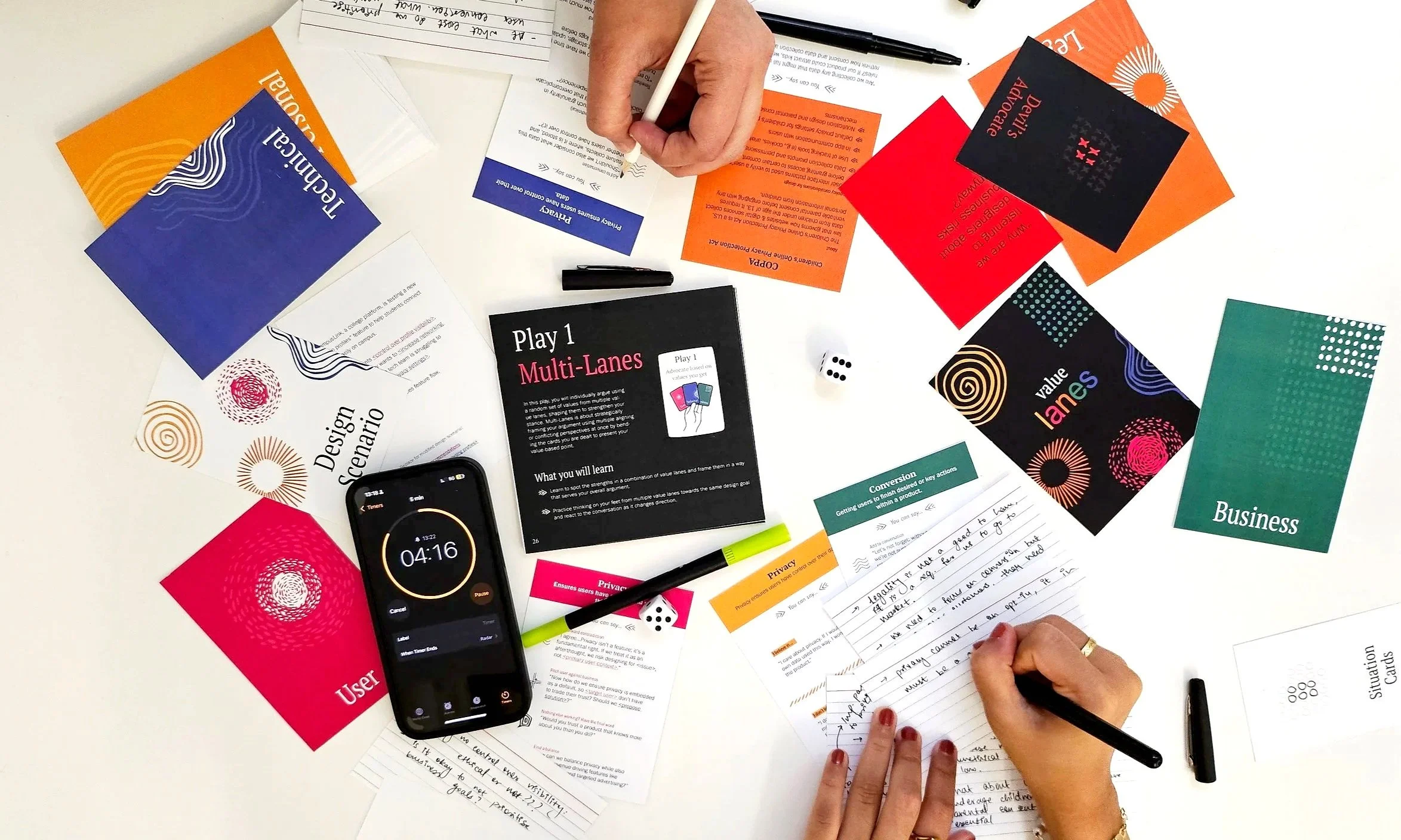
It is all about a “Balanced Dialogue”, not rhetorical bombs
Walton defined ethical argumentation as ``a defeasible argumentation process, conducted in a balanced dialogue, through which ethical justification is achieved…..using techniques such as asking critical questions, uncovering implicit assumptions, examining accepted values, and deconstructing emotive or loaded terms and persuasive definitions.”
The primary focus is on a ``Balanced dialogue'' where ethical argumentation treats values, definitions, emotive terms — often present in moral discourse — not as rhetorical bombs to shut down debate, but as elements to be critically analyzed and clarified.
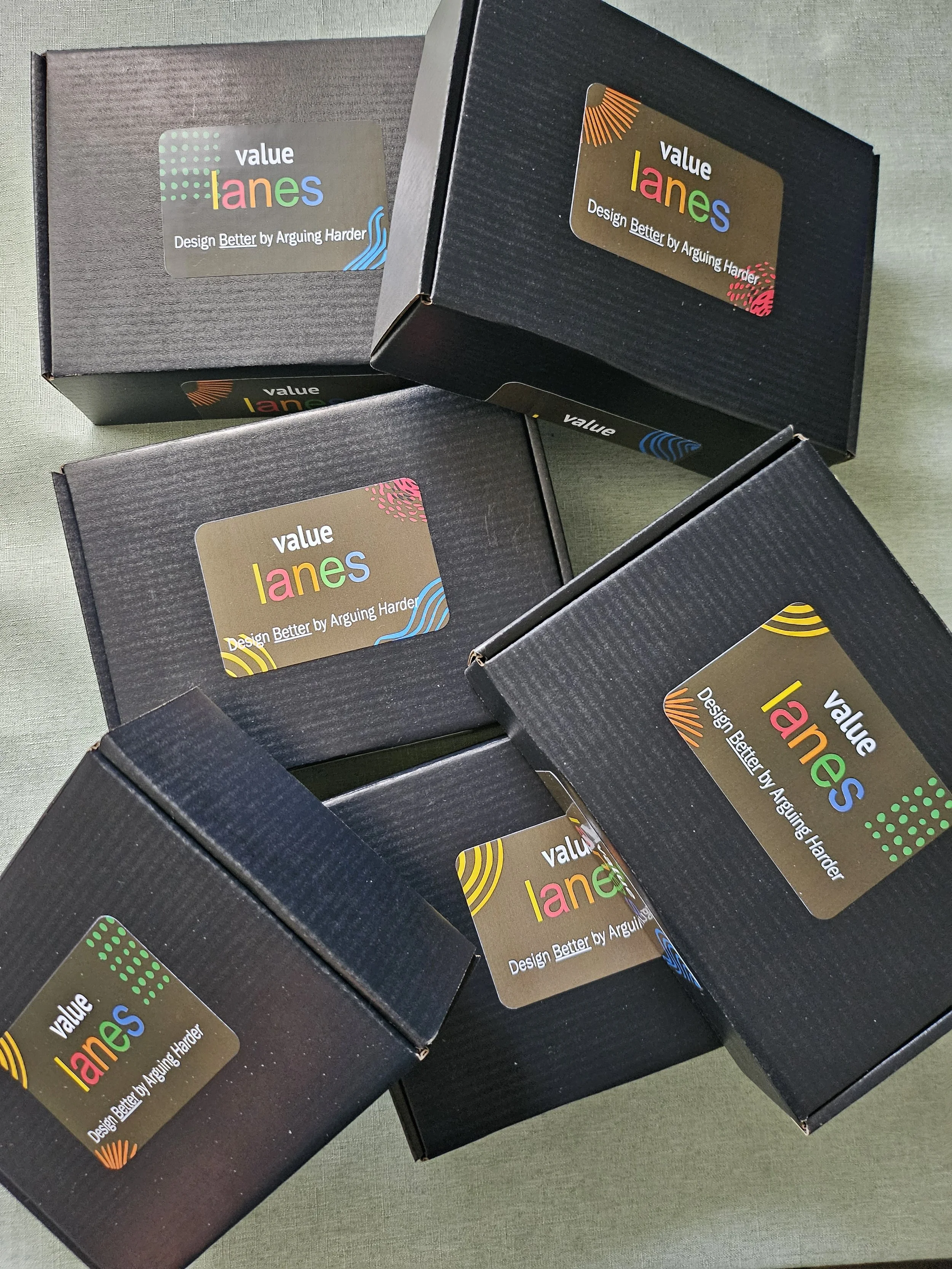
There are a limited number of physical card decks available for educators in the US. Please email us at schivuku@pratt.edu for more information.
Credits of web-tool: Dr. John Decker, Pratt Institute, New York.
Using Value Lanes
In classrooms
Activities for you, educators!
Thoughtfully crafted tools and activities for educators to inculcate ethical argumentation skills in design classrooms.
I want my students to…
-
Use our Multi-lane activity models and resources.
-
Use our Single-lane activity models and resources.
-
Use our Debate activity models and resources.
-
Use our Pitch activity models and resources.
Multi-Lane
Multi-Lanes activity is about strategically framing ethical argumentation skills using multiple and combination of aligning or conflicting values from different value lanes to present their design argument.
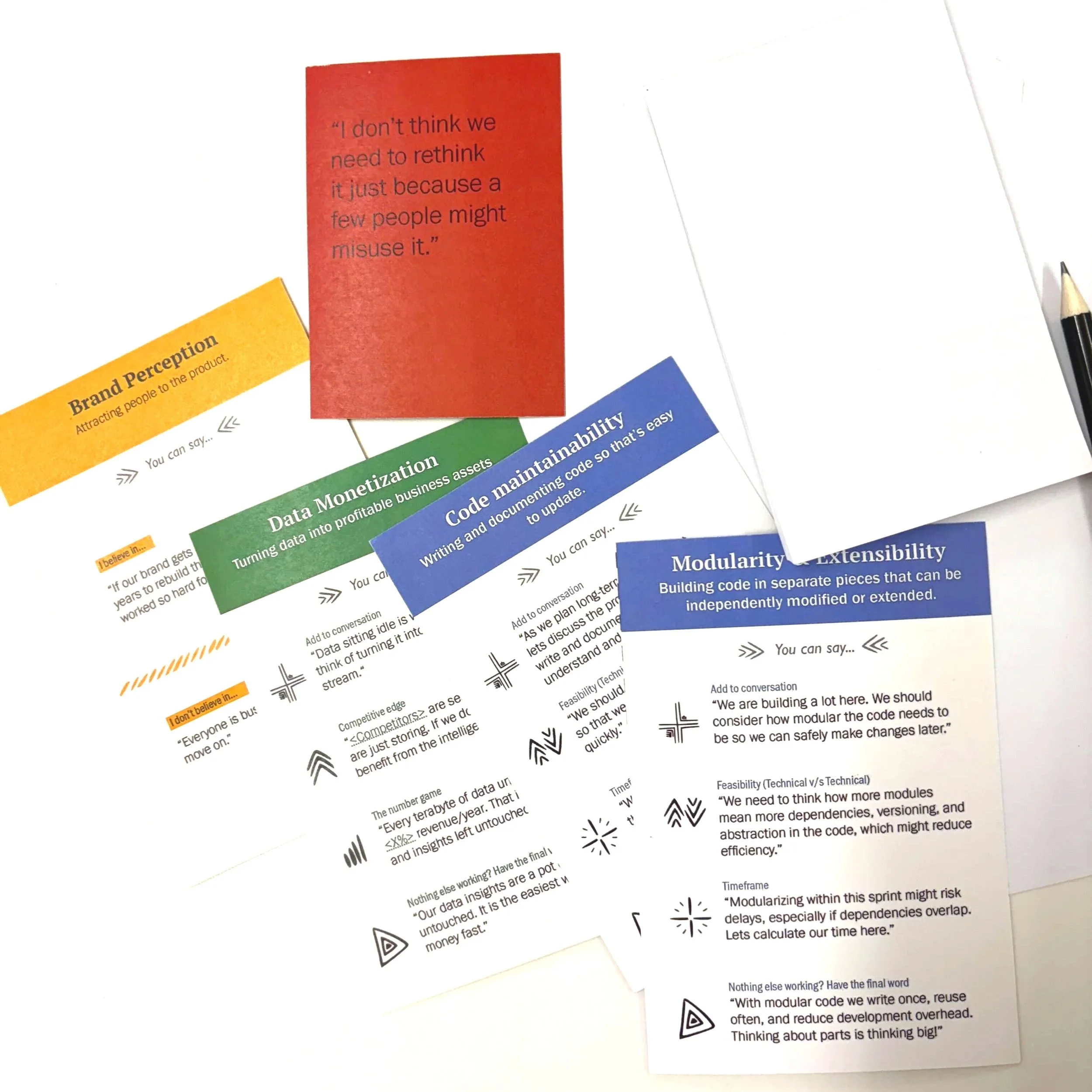
Activity:
In a team of 3-4 students, draw a Design Scenario Card or a prompt given to students in class.
For each student, draw a random set of 5 cards from all five lanes. Pick a random number for a student to deal set of cards from this table.
Guide students to have 10-15 mins discussions based on the cards dealt.
Variety: To spice up the collaboration, deal Devil’s Advocate cards to challenge an ongoing conversation.
Student Learning Outcomes:
Spot the strengths in a combination of values and/or value lanes and frame them in a way that serves their overall argument.
Articulate and navigate multiple value lanes towards a shared design goal.
Identify appropriate values, value lanes, or types of arguments (from multiple of these combinations) as a reaction to an ongoing conversation as it changes direction.
Single-Lane
Single-Lane activity is about consistently building ethical argumentation skills from one value lane perspective throughout a design discussion, using multiple values within that lane.
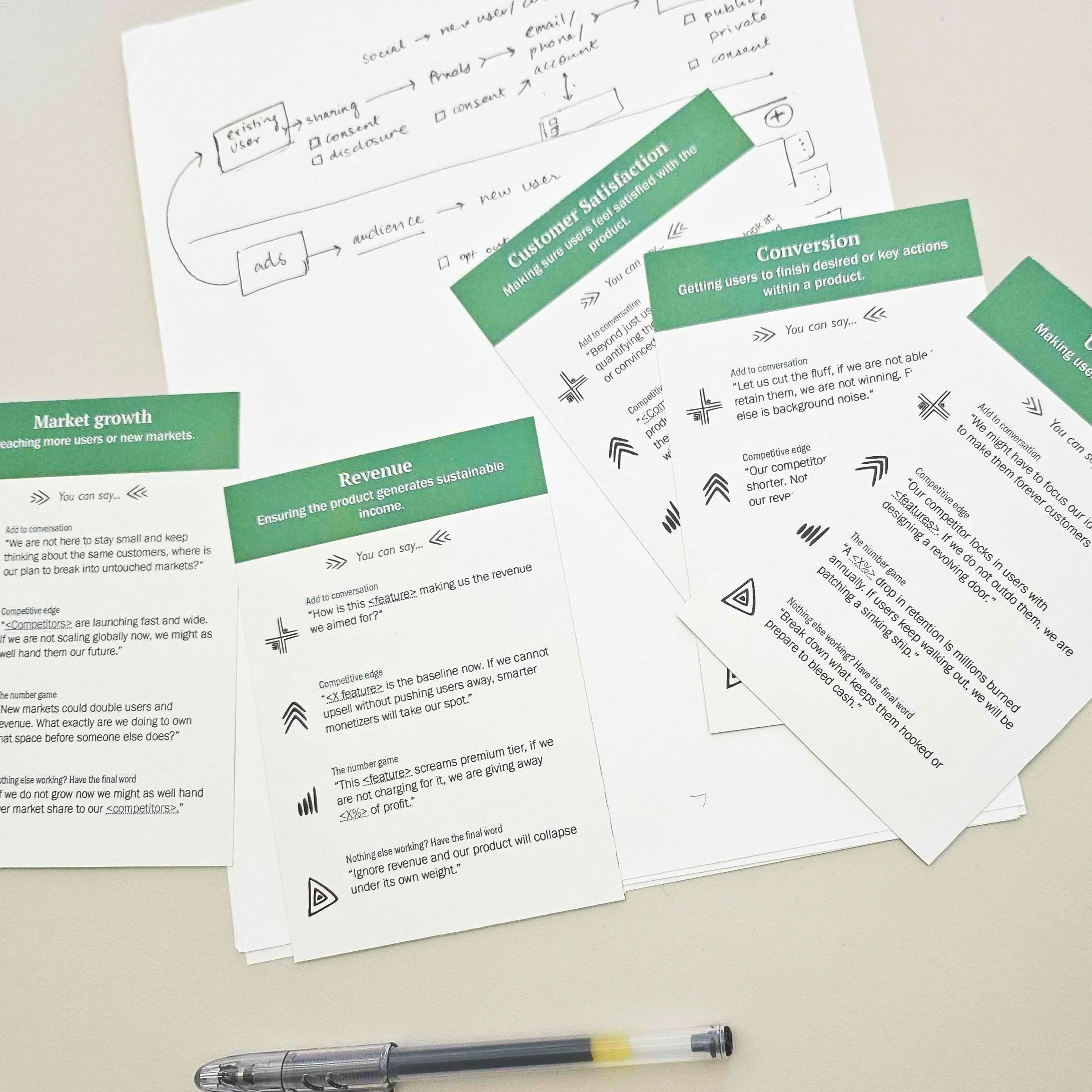
Activity:
In a team of 3-4 students, draw a Design Scenario Card or a prompt given to students in class.
For each student, assign them to one Value Lane (User, Business, Technical, or Legal) to embody values and decisions within that lane.
Guide students to have 10-15 mins discussions based on the cards dealt.
Variety: Foster serendipitous moments by allowing students to switch between lanes, training designers to build an adaptive mindset where they are able to develop arguments from different value lane perspectives.
Identify which lane is dominating over the other and facilitate to push a lane forward as needed.
Student Learning Outcomes:
Advocate strongly within one value lane by exploring the positives and trade-offs each value and lane offers, often taking prior responsibility of that lane.
Compare and contrast uses and trade-offs among different values within a particular value lane.
Develop fluency in a particular disciplinary vocabulary and reasoning patterns around values
Debate
Debate activity is about developing ethical argumentation skills by forming alliances with another value lane and contesting against other value lanes at the same moment
Team A: Technical + User
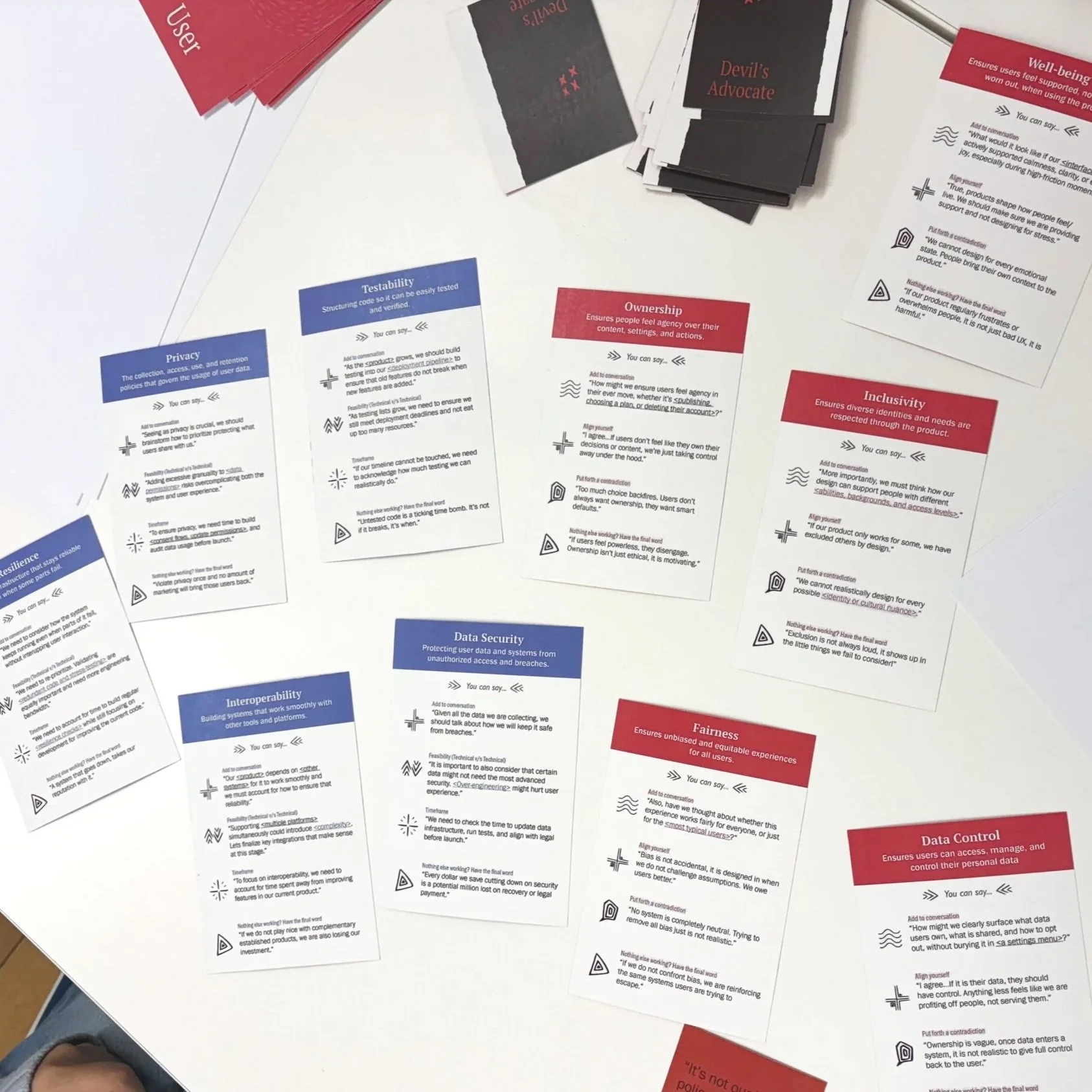
Team B: Business + Legal
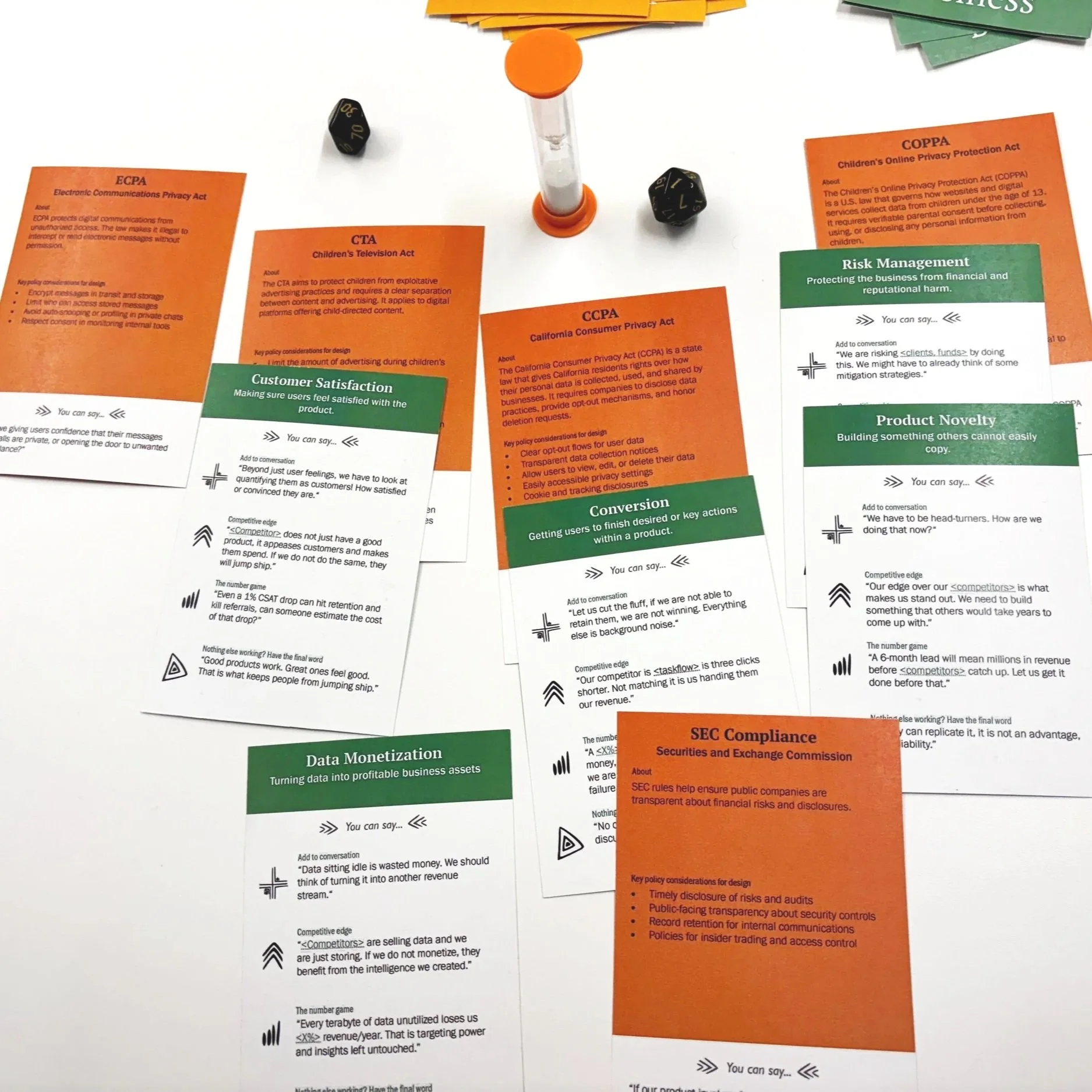
Activity:
In a team of 3-4 students, draw a Design Scenario Card or a prompt given to students in class.
Divide the team into 2 sub-teams .
In each sub-team, each student will be assigned to represent a particular value lane. Each sub-team should have a combination of two value lanes.
Educators can use any of these combinations:
Team A: User + Legal ; Team B: Technical + Business
Team A: User+ Technical; Team B: Legal + Business
Team A: User + Business; Team B: Technical + Legal
Deal random set of 3-5 cards per lane for the sub-teams.
Guide students to have 2 mins of opening statements to put forth their value-propositions. Afterwards, facilitate multiple rounds of debate in order to have balanced dialogue.
Note for Facilitation of the debate: Educators can assess how well students are unpacking the value tensions that might arise in design development and how well they could articulate it within the team using the value lanes. This would need the educators to observe an ongoing debate and provide feedback to the team of students.
Identify which sub-team is dominating over the other and facilitate to push the other sub-team forward as needed. The idea of the debate is not to win, but to surface tensions between differing value propositions.
Student Learning Outcomes:
Leverage the power and limits of combining value lanes and play it against the rest value lanes building counter argumentative skills.
Frame and defend values within and against lanes using persuasive techniques under real-time pressure while navigating value lane tensions and flare-ups.
Balance values and conversations achieve the same design goal; simulating an inter-disciplinary team discussion.
Pitch
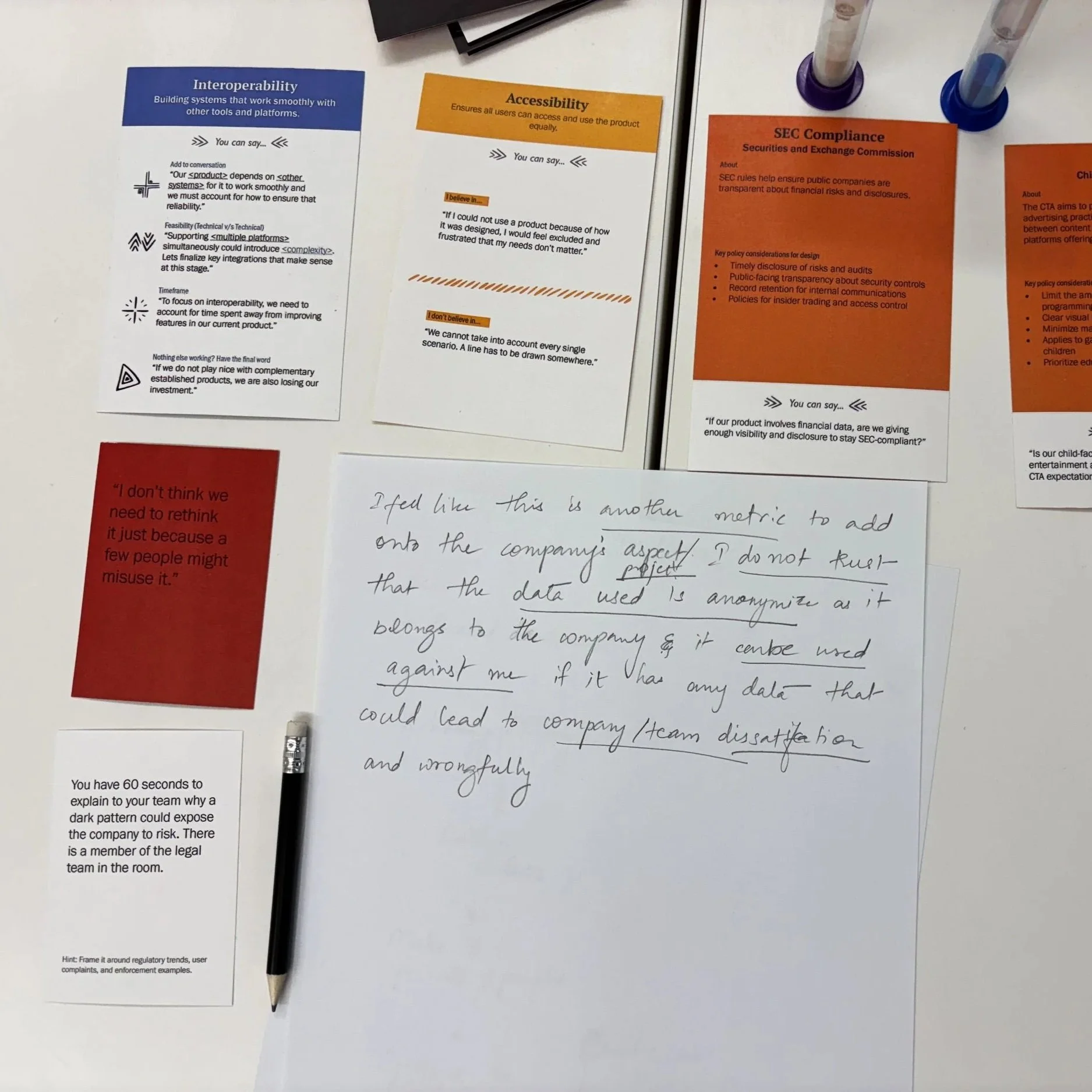
Pitch activity is about expanding ethical argumentation skills by individually tailoring arguments— tone, timing, style, language, priorities—under different conditions such as different workplace scenarios, contexts, and audience.
Activity:
In a team of 3-4 students, draw a Design Scenario Card or a prompt given to students in class.
For each student, draw a random set of 5 cards from all five lanes. Pick a random number for a student to deal set of cards from this table.
Give each student a different situation/ context for which they have to build an argument. Here are couple situations you can assign students.
Compare and contrast the differences in argument for all the situations and the same Design Scenario/prompt.
Student Learning Outcomes:
Cultivate confidence in argument presentation and learn variances value lane prioritization across different stakeholders and contexts.
Practice shifting tone and focus of argumentation depending on whether one has to pitch, defend, and/or persuade.
REFERENCES


Read more about Value Lanes and ethical argumentation strategies in our paper: Chivukula, S. S., Bharadwaj, A., & Mehta, S. (2026, May). Value Lanes: A framework to inculcate ethical argumentation skills in design classrooms. EduCHI 2026: 8th Annual Symposium on HCI Education (EduCHI ’26). https://doi.org/10.1145/3803869.3803880.
Educator Activities using Value Lanes deck: https://www.translate-ethics.com/translate-work/value-lanes-game/#valuelanes-educators-classactivities
Cite this dataset at: Chivukula, S. S., Bharadwaj, A., & Shikha Mehta. (2026). Value Lanes Dialogues [Data set]. Zenodo. https://doi.org/10.5281/zenodo.20680254